Mighty Buildings Site Prep & Utilities: The West Covina Owner’s Guide
If your Mighty Buildings unit arrived on a lot that wasn’t prepped correctly, or your existing site utilities are failing after install, we stock and install Mighty Buildings-compatible site prep and utility components across West Covina, with most jobs in the $4,200 – $9,800 range installed. The quick answer: we match your unit’s specific utility stubs and elevation requirements, fix the grading or trenching, and get your connections square before the next inspection. Most owners discover the problem when water backs up at the exterior utility stub, the main electrical feed won’t hold a load, or the unit settles because the pad wasn’t compacted to the manufacturer’s spec.
Fielding ADU West Covina is an independent service provider; we are not affiliated with Mighty Buildings. We do this work because half the Mighty Buildings units we see in the San Gabriel Valley were set on pads that were “close enough,” and close enough fails inside two years.
Which Mighty Buildings Models This Applies To
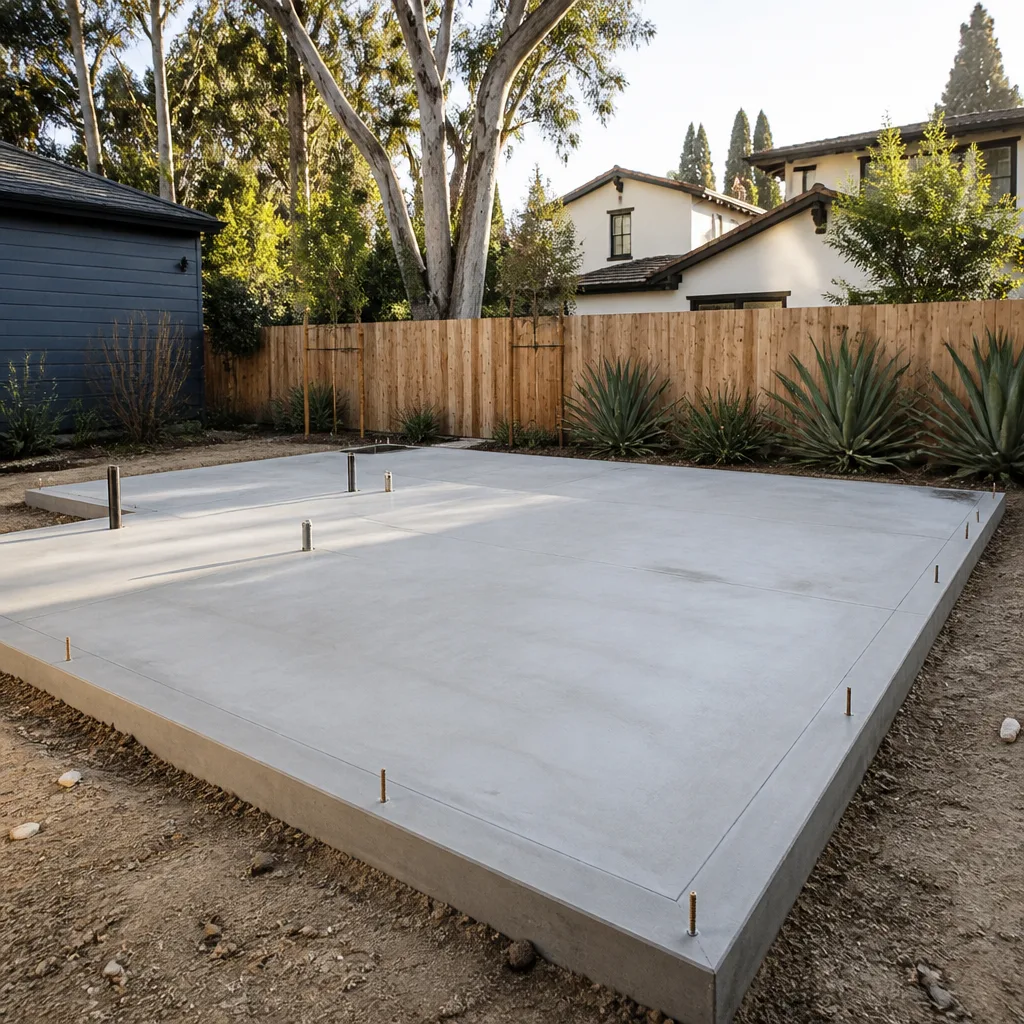
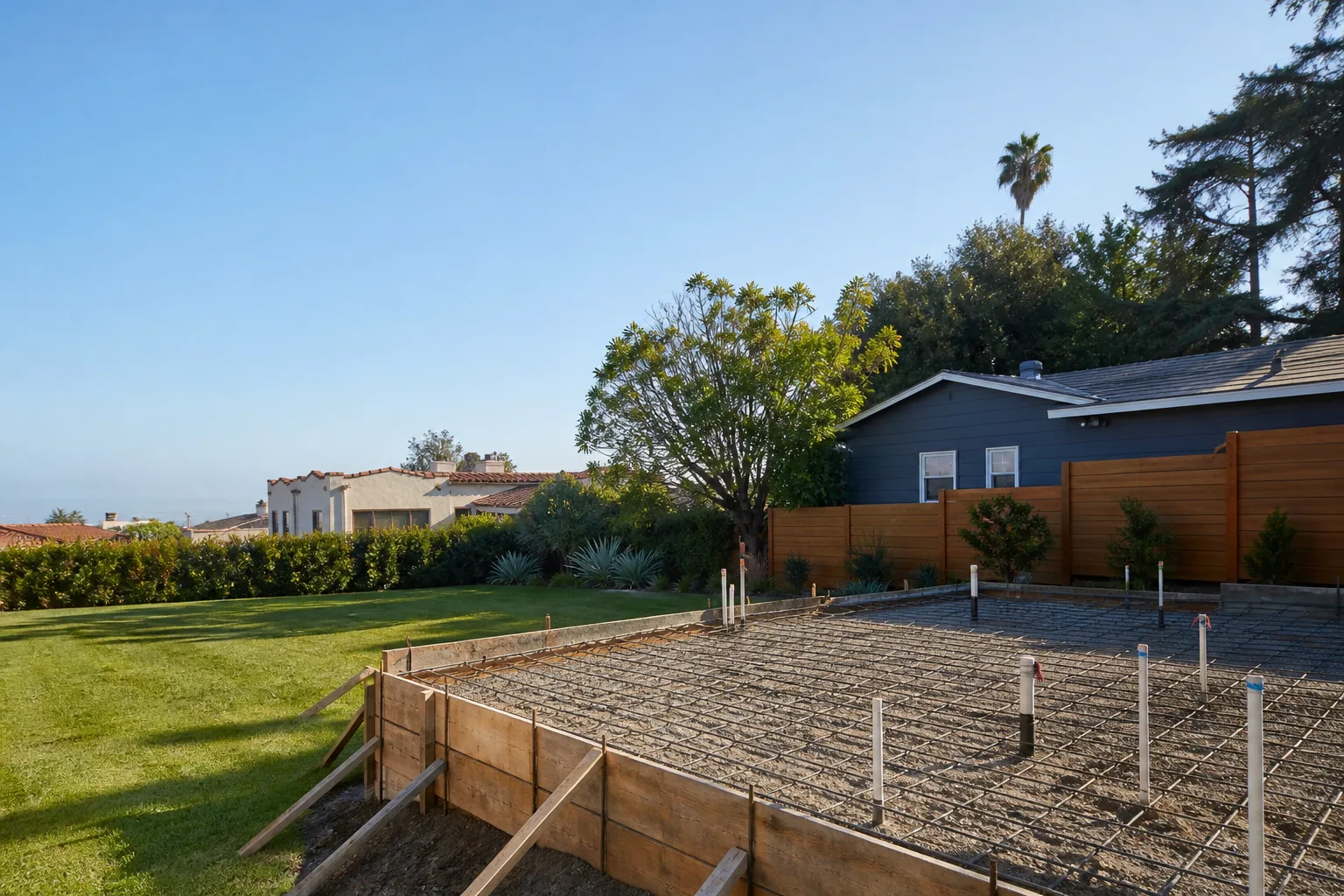
Mighty Buildings manufactures panelized ADU shells under the Mighty House line, with utility chase locations printed on the unit’s spec sheet and usually stamped on a plate inside the mechanical closet. The site prep and utilities for a Mighty House One or Mighty House Two follow the same core pattern: a compacted gravel or concrete pad with anchor points matched to the unit’s steel frame, a 4-inch sewer lateral to the city main, a 1-inch water service line stubbed at the unit’s marked inlet, and a 100-amp or 200-amp electrical feed depending on the unit’s panel rating.
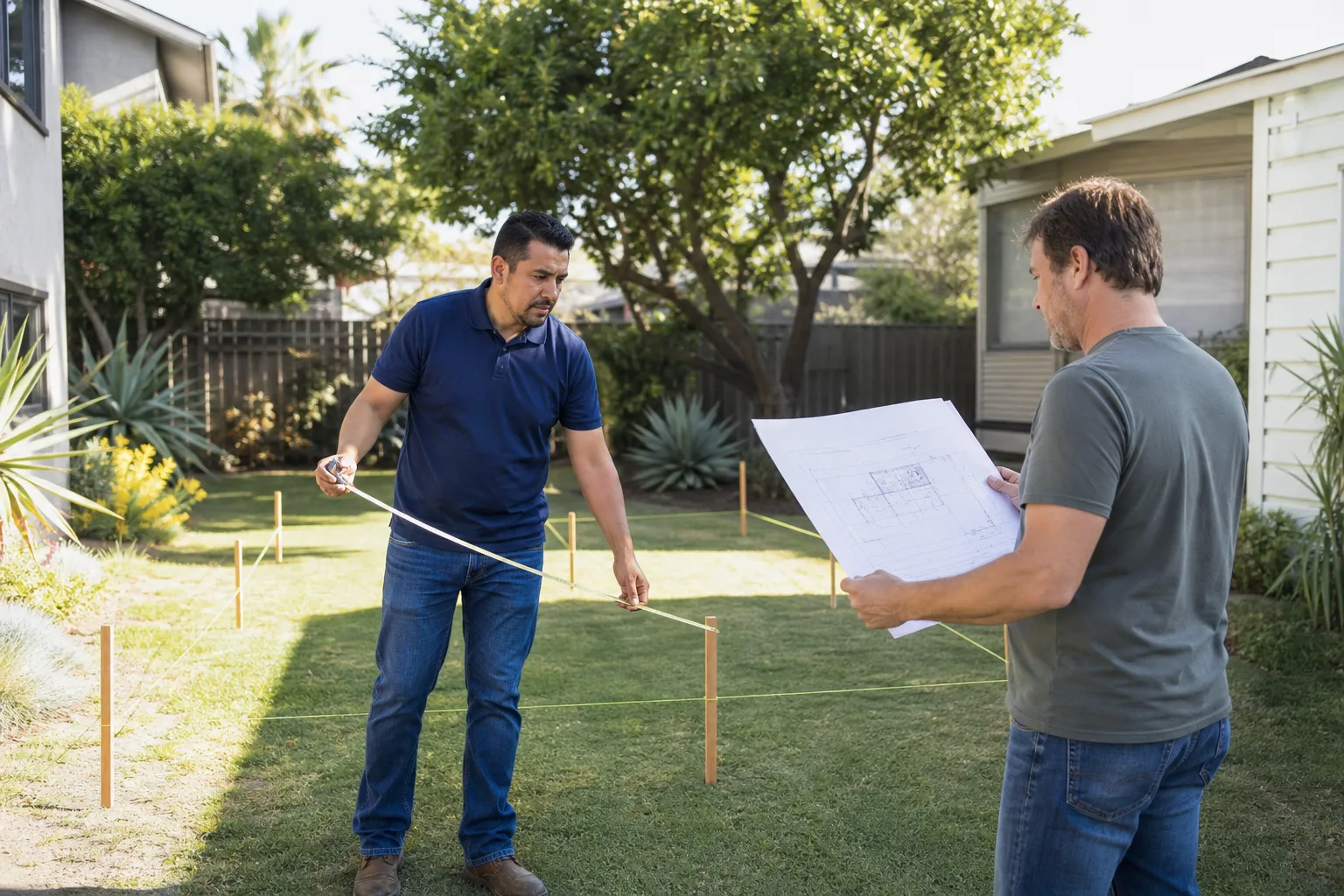
The compatibility gotcha West Covina owners hit most often: the utility stub locations on a Mighty House unit are fixed to within an inch. If your trench was dug to “roughly the right spot,” the flex connector gets bent past its limit, and you get a slow water leak at the stub or a sewer connection that never quite seals. We measure from the unit’s stamped drawings, not from memory. For electrical, we match the panel’s listed ampacity and run copper, not aluminum, because West Covina’s clay-heavy soil corrodes aluminum feeder lines faster than the manufacturer assumes. On the OEM-versus-aftermarket question: Mighty Buildings does not sell its own trenching or pad components, so the parts we install (pads, conduit, pipe, disconnects) are standard trade components sized to the unit’s spec sheet. The “OEM” item is the spec compliance, and that’s what we follow.
Signs Your Mighty Buildings Site Prep & Utilities Is Failing
- Water pressure drops when a second fixture runs. This usually means the stub line was undersized or kinked at the flex connector during set. The unit’s manifold calls for a specific flow rate; anything less shows up at the shower first.
- Sewer smell near the exterior utility wall. The lateral wasn’t bedded properly, and the pipe has settled out of pitch. In West Covina’s expansive clay, this happens faster than in sandy soils.
- Breaker trips when the mini-split and range run together. The feeder you have is sized for a smaller load than the unit’s actual draw. Mighty Buildings panels are rated for the unit’s all-electric load, and an undersized feed trips exactly when you don’t want it to.
- Water pools against the unit’s corner after rain. The pad was poured without enough slope away from the structure, or the compaction under it wasn’t done right and one corner has settled. Both are fixable, but the fix is trenching and re-grading, not caulk.
- Visible gap between the unit base and the pad. That’s settlement, plain and simple. It happens when the pad wasn’t compacted in lifts to the manufacturer’s psi spec. Water gets in, the steel frame starts to see corrosion, and the problem compounds.
Replacement Cost & What’s Included
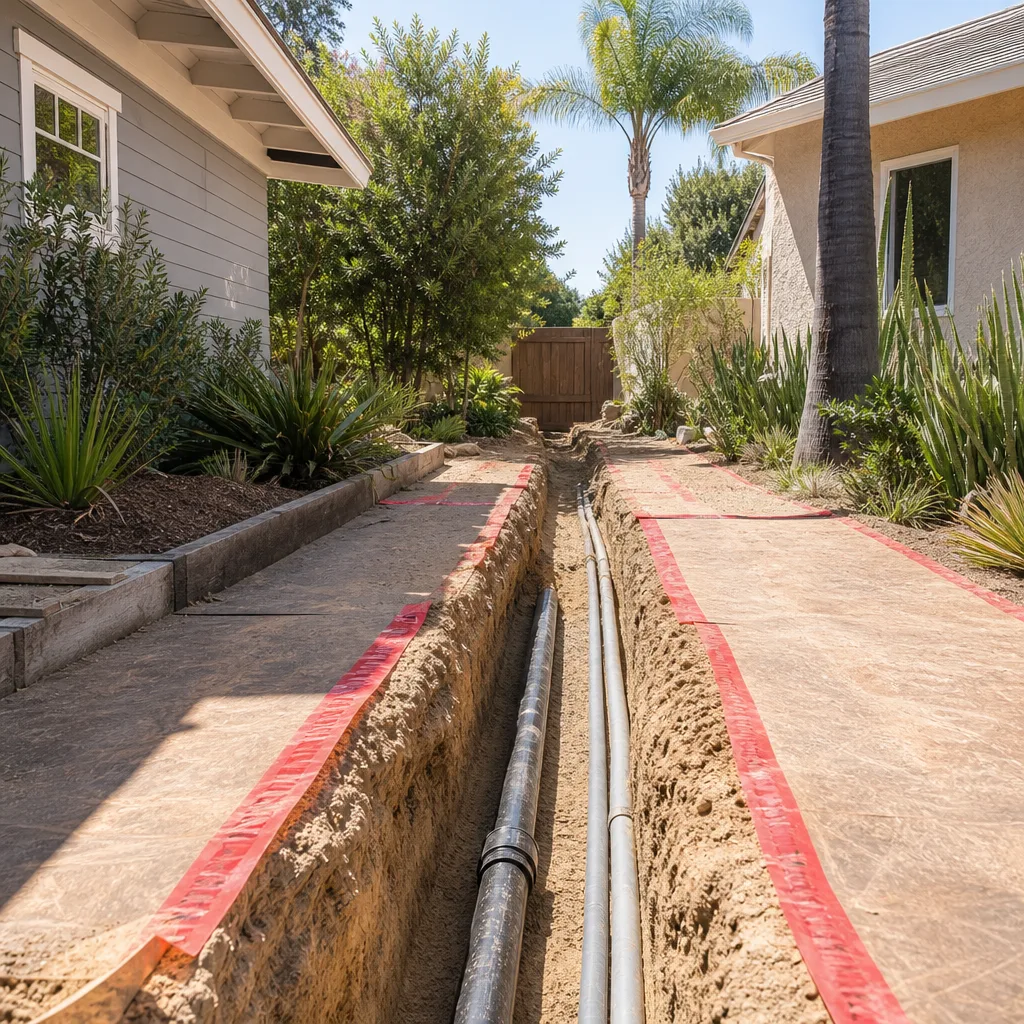
In West Covina, full site prep and utility work for a Mighty Buildings unit typically falls between $4,200 and $9,800 depending on trench length, existing soil condition, and whether the city requires a new water meter or sewer tap. Here’s the breakdown we give every customer before work starts:
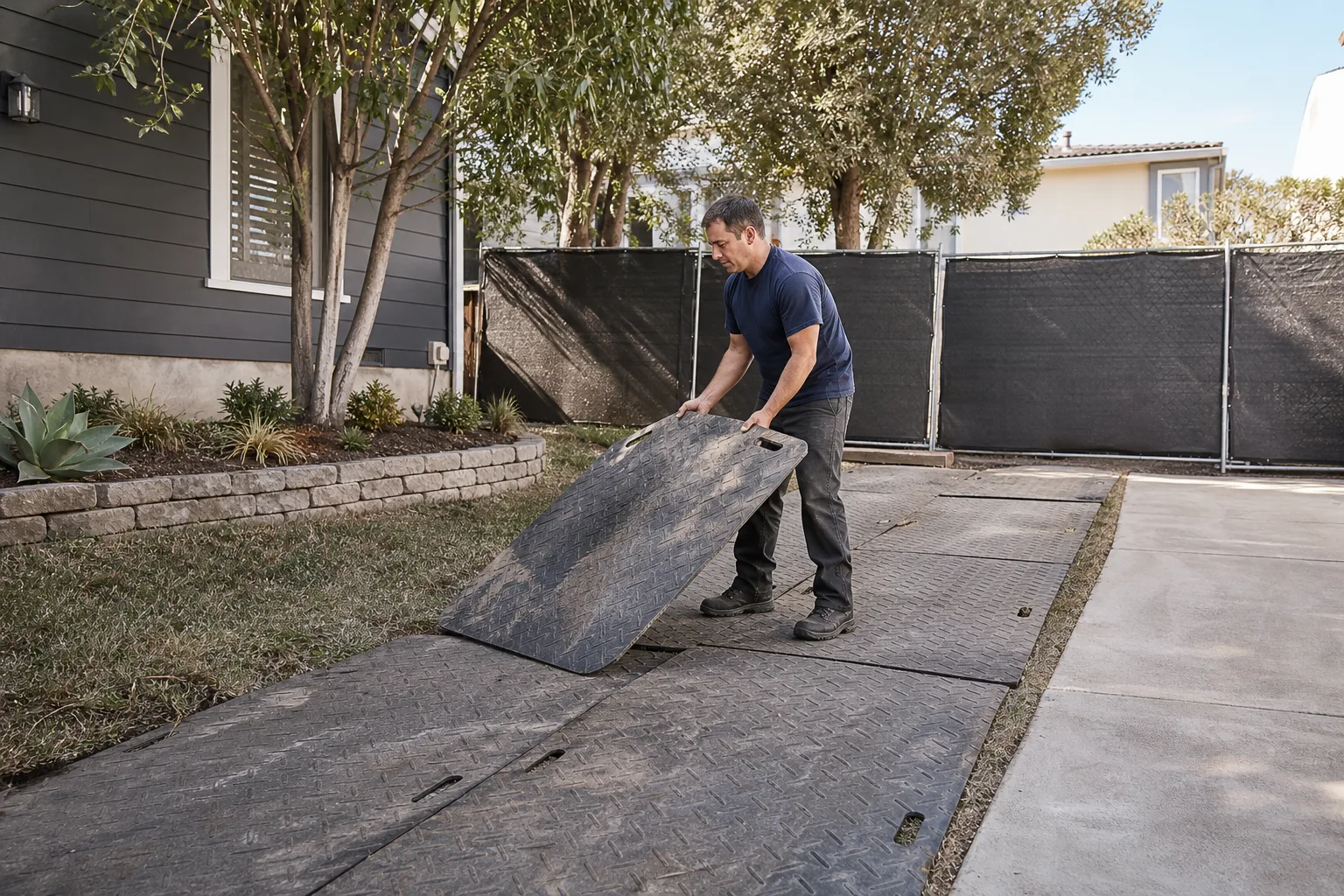
- Pad regrade and compaction: $900 – $2,200, including removal of failed base material and compaction in lifts to spec.
- Sewer lateral replacement or repair: $1,500 – $3,800 depending on depth and distance to the main. West Covina requires a city inspection on any lateral work, and we pull that permit.
- Water service stub and connection: $600 – $1,400, including the compression fitting at the unit inlet.
- Electrical feeder and disconnect: $1,200 – $2,400 for a 100-amp or 200-amp run, copper conductors, and a weather-rated disconnect.
Every line item goes in writing before we move dirt. The number you approve is the number on the final invoice. If the work fails inside a year, we come back and correct it at no charge under the 365-Day Done Right Promise. Reed Calloway doesn’t write change orders after the fact, and neither do his crews.
DIY or Call Us?
You can safely check your unit’s spec sheet against the visible stub locations, look for pooling water, and note whether the breaker trips under normal use. That’s useful information to have before you call. What you should not do is dig your own trench to the sewer main or open an electrical panel. A sewer lateral in West Covina can run six feet deep, and the city requires a permit and inspection on any lateral repair. The electrical side is worse: a Mighty Buildings unit can pull a full 100-amp load, and an improperly torqued lug is how feeders melt. If you’re comfortable checking and documenting, do that. If the fix involves a trench, a panel, or a pad, call (559) 238-9583 and we’ll put the scope and the price in writing.
FAQs
A properly compacted pad and correctly bedded utility lines should give you 20-plus years before any meaningful repair. The failures we see in West Covina are almost always install-related, not age-related: pads that settled inside 18 months, stub flex connectors that kinked at set, or undersized feeders that never should have passed.
If the pad has settled more than a half inch, the fix is usually removal and re-pour with proper compaction, not patching. Slab jacking can work for minor settlement, but for a Mighty Buildings unit with a steel frame, the pad has to be flat and at the right elevation or the utility connections won’t align. Call (559) 238-9583 and we’ll tell you which one you’re looking at.
Most repairs run two to five working days depending on trench length and inspection scheduling. A full pad replacement with utility reconnection usually takes about a week. We schedule the West Covina city inspection when we submit the permit, and we don’t leave a half-done trench open overnight.
We keep the standard trade components on our trucks: copper feeders, water service hardware, sewer pipe, flex connectors, and compaction material. We don’t stock Mighty Buildings-specific parts because the unit itself doesn’t need them – the spec sheet tells us the sizes, and we match them. We also have working relationships with installers for Abodu, Cover, and Dvele units, so if you’re pricing a different platform, we can speak to the utility differences.
Written by Reed Calloway, Owner, Fielding ADU West Covina at Fielding ADU West Covina, serving West Covina and nearby areas.