Abodu Site Prep & Utilities: The West Covina Owner’s Guide
Site prep and utility installation for an Abodu unit in West Covina typically runs $18,000 to $45,000 depending on your lot conditions, trenching distance, and whether PG&E or SoCalGas needs to extend a service line. Most West Covina properties need some combination of grading, foundation work, utility trenching, and panel upgrades before the Abodu unit can be set. You usually discover a problem here not because something “failed” during use, but because the city’s plan checker flags a missing spec, the utility company schedules a hold, or your lot’s soil test comes back with a compaction rate that won’t carry the unit’s point loads.
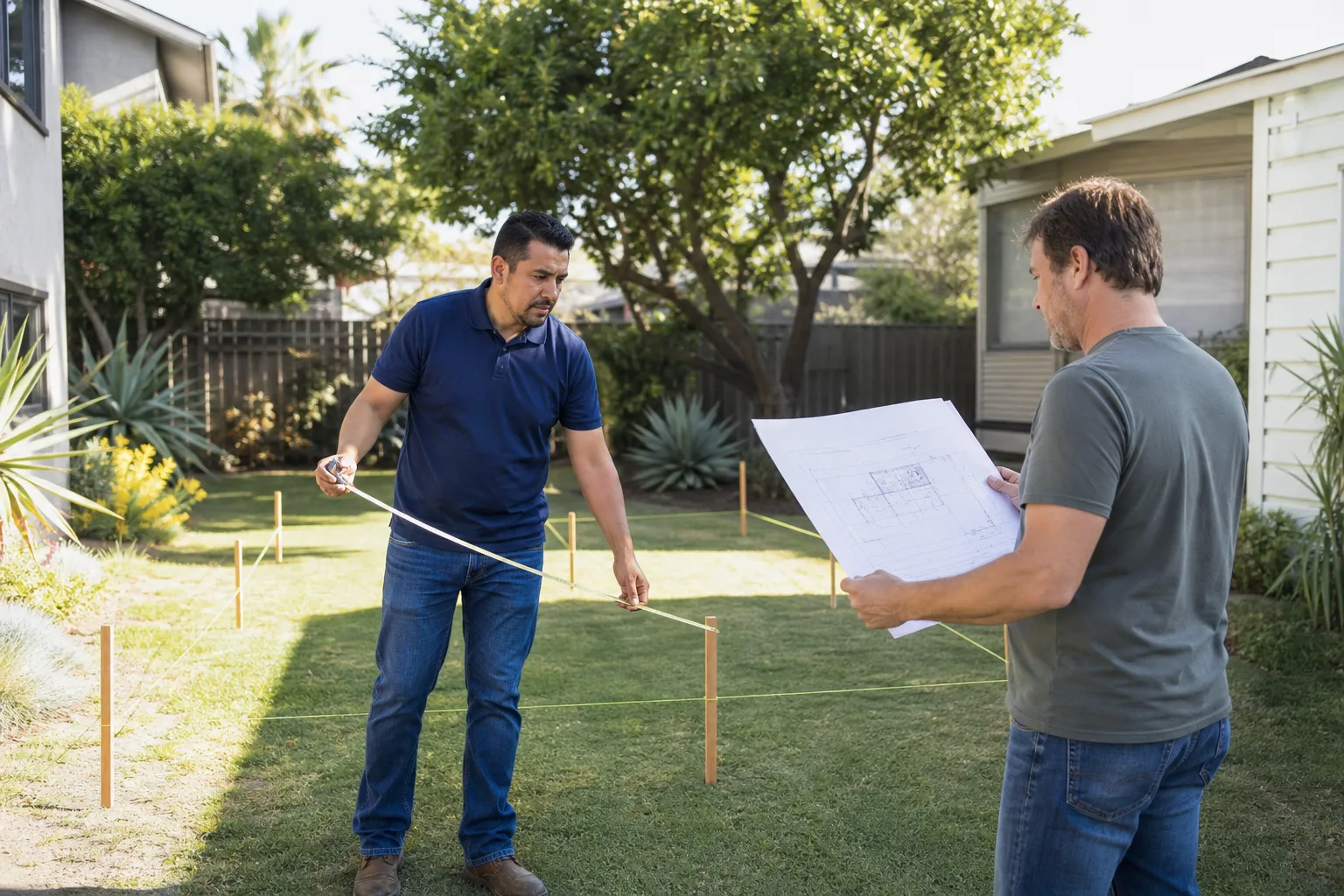
We handle the full site prep sequence for Abodu units: demolition of existing surfaces, grading and compaction, trenching for water, sewer, gas, and electrical, and the final hookups that get you to occupancy. We’re an independent contractor in West Covina, not an Abodu affiliate. We just know their units well enough to prepare a site correctly the first time.
Key Takeaways
- Typical site prep and utilities cost in West Covina: $18,000 – $45,000 before permit fees, depending on lot slope, soil, and utility distances.
- Biggest cost driver: trenching distance from the street main to your unit’s stub-out location. The farther back the unit sits, the more per linear foot you pay.
- Most common West Covina delay: PG&E and SoCalGas service upgrades scheduled 6 – 10 weeks out. We sequence this early so it doesn’t stall your crane day.
- What we provide before work starts: a written, line-item price. No change orders unless you change the scope.
- What covers the finished work: The Garrison Standard, a one-year written warranty. If a hookup fails inside that year, we return and fix it at no charge.
Which Abodu Models This Applies To
Abodu currently produces the Studio, One Bedroom, Two Bedroom, and the newer Two Bedroom Plus. All of them share the same site prep fundamentals: a compacted gravel or concrete pad, stub-out utilities placed to match the unit’s underside connection points, and a main service panel capable of handling the unit’s 100-amp draw. What differs is pad size and point-load placement. The Two Bedroom Plus runs a wider footprint and needs additional compaction under the bedroom wing. The Studio is the easiest to site; its narrower footprint fits more West Covina lots without a setback variance (the city’s written permission to build closer to the property line than the standard rule allows).
You’ll find the unit’s site prep requirements in the Abodu Site Guide that shipped with your purchase. The spec sheet lists the exact stub-out offsets, trench depths, and pad dimensions your unit needs. If you don’t have the guide, we can pull the specs from the unit’s serial number and match them to Abodu’s published standards. Our crews carry a copy of the current spec book for every Abodu line we service.
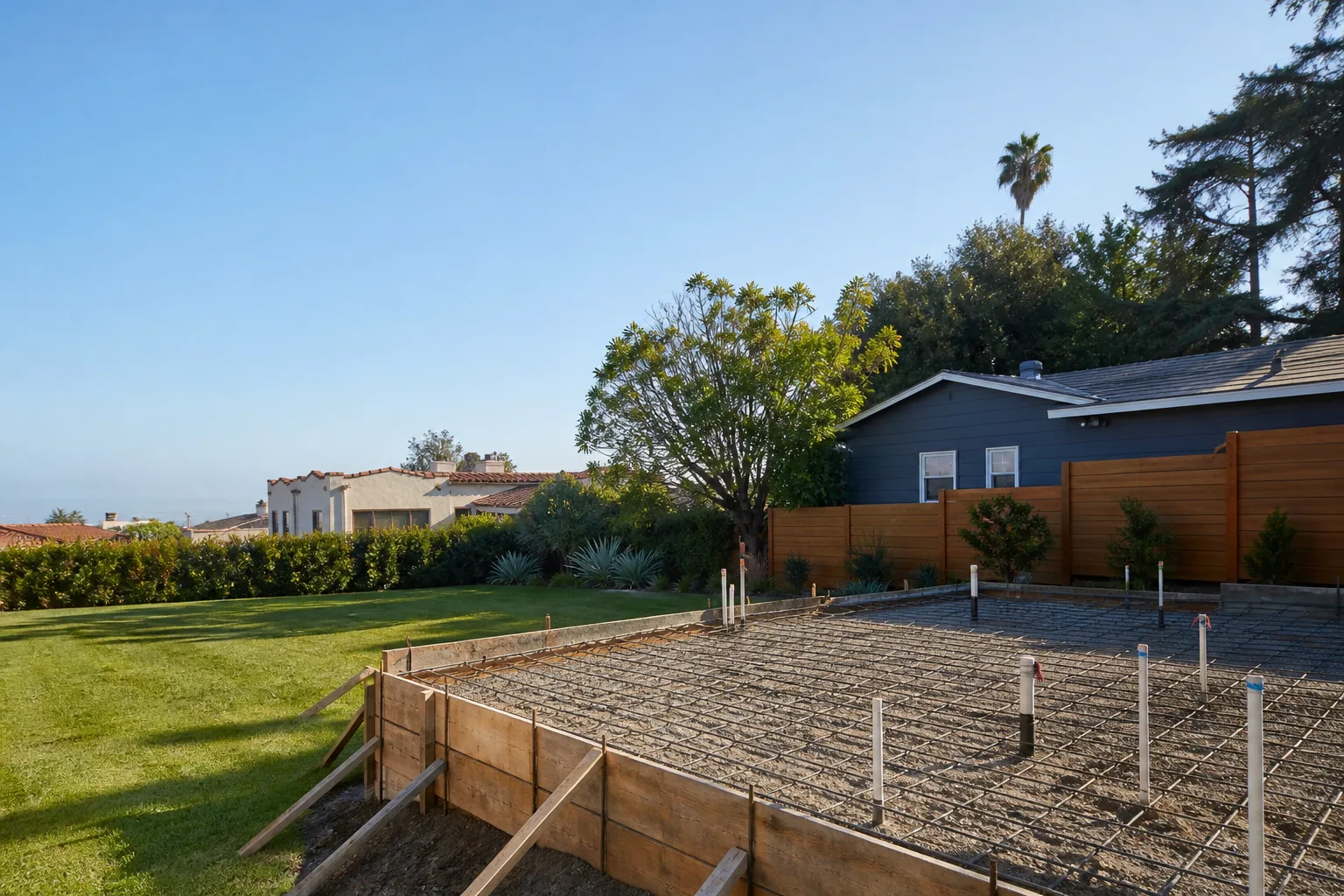
On the OEM-vs-aftermarket question: site prep materials themselves aren’t brand-specific in the way a glazing gasket or mini-split condensor is. There’s no “Abodu-brand” PVC or “Abodu-brand” rebar. What matters is that the materials meet West Covina building code and the specs Abodu publishes. We use schedule 40 PVC for sewer, Type L copper or PEX-A for supply lines, and 200-amp panels from Square D or Eaton. Where we won’t cut corners is on the pad: we compact in 6-inch lifts with a plate compactor and test to 95% relative compaction, because an Abodu unit set on a soft pad will settle unevenly and you’ll feel it in every door swing.
Signs Your Abodu Site Prep & Utilities Is Failing
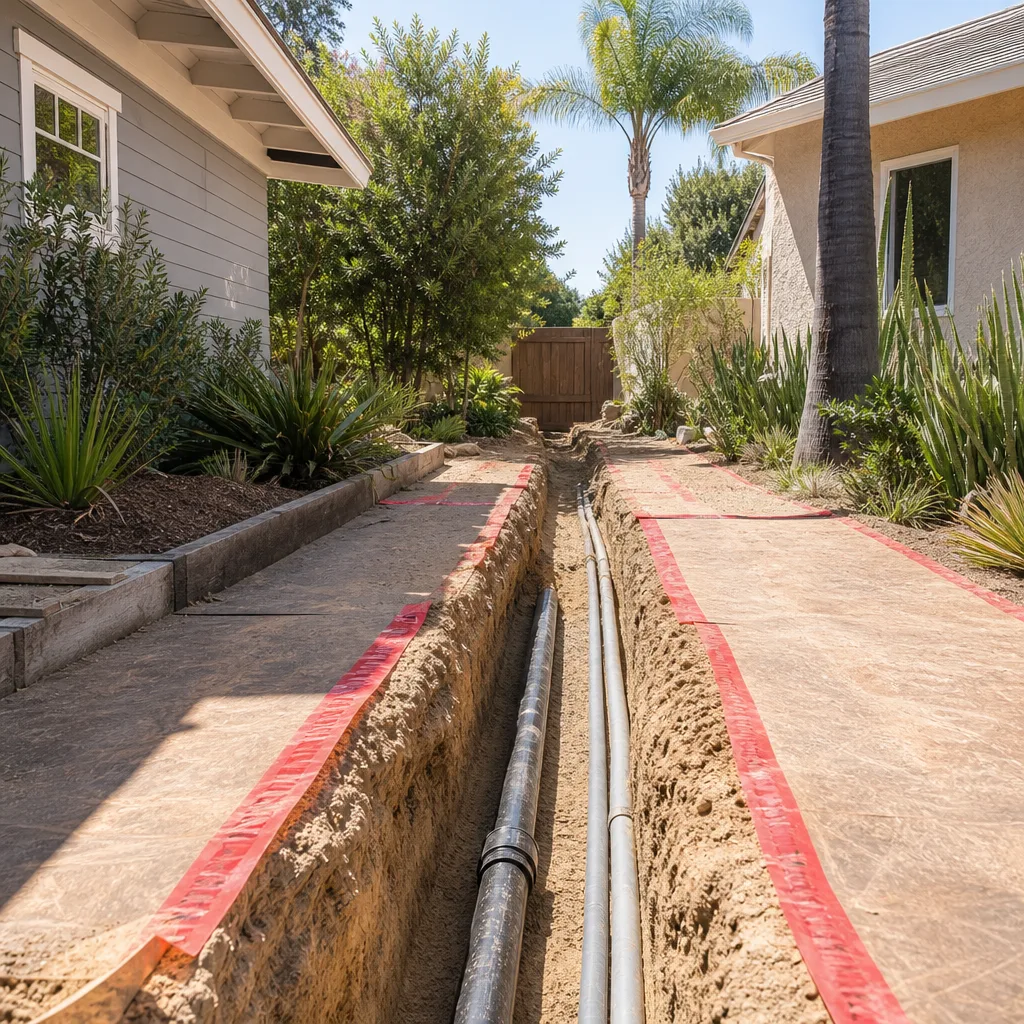
Site prep failures show up in specific ways. Here’s what we see most often on West Covina jobs where a homeowner or a previous contractor cut a corner:
- Doors that bind or drift open. The unit settled because the pad wasn’t compacted properly, usually at the deepest fill point. A 1/2-inch differential settlement is enough to throw off every door and window in the unit.
- Sewer backups that repeat. The waste line was laid without the right fall (1/4-inch per foot minimum) or someone used cheap thin-wall pipe that bellied under the trench weight. You’ll see slow drains first, then a full stop.
- Low water pressure at the unit while the main house is fine. The supply line is undersized or kinked at the riser. Abodu units need a 1-inch supply line minimum; we’ve seen 3/4-inch pipe to a unit with a washing machine, dishwasher, and two baths, and it chokes every time two fixtures run at once.
- Breaker trips when the mini-split kicks on. The panel or the feeder from the house isn’t sized for the unit’s actual load. Abodu specs call for 100 amps at the unit subpanel. If someone ran 60 amps to save money, you’ll feel it in August when the A/C starts.
- Water pooling under the unit after rain. The pad was graded flat instead of sloping away, or the drainage swale was skipped entirely. West Covina’s winter rains will find the low spot under your unit and keep it damp, which accelerates rust on the chassis and invites rodents.
If you’re seeing any of these, the problem usually traces back to one of three phases: undercompaction, undersized utilities, or missing drainage. They compound over time.
Replacement Cost & What’s Included
Here’s the honest price structure for Abodu site prep and utilities in West Covina, based on what we’ve bid and built in this city over the last several years:
| Scope Item | Typical Range | What Moves the Price |
|---|---|---|
| Pad grading, base, and compaction | $4,000 – $9,000 | Lot slope, access for equipment, soil condition |
| Concrete pad (if poured) | $6,000 – $12,000 | Pad size, rebar schedule, finish level |
| Utility trenching and backfill | $3,500 – $11,000 | Distance from street main to stub-out, soil type, obstacles |
| Water line and sewer tie-in | $2,500 – $6,500 | Main type (cast iron or ABS), depth at connection |
| Electrical: subpanel, feeder, trench | $3,000 – $8,000 | Feeder distance, panel size, existing house capacity |
| Gas line extension (if applicable) | $1,800 – $4,500 | Distance, meter location, pressure requirements |
| Drainage and swale work | $1,500 – $4,000 | Existing grade, soil percolation, catch basins needed |
Every bid we hand a West Covina homeowner breaks these line items out individually, with the materials listed by name and the labor estimated in hours. The price we write is the price you approve. If we hit a rock shelf during trenching and need different equipment, we absorb that, not you. The work is covered under The Garrison Standard for 365 days after sign-off: workmanship defects get corrected at no charge, no argument.
DIY or Call Us?
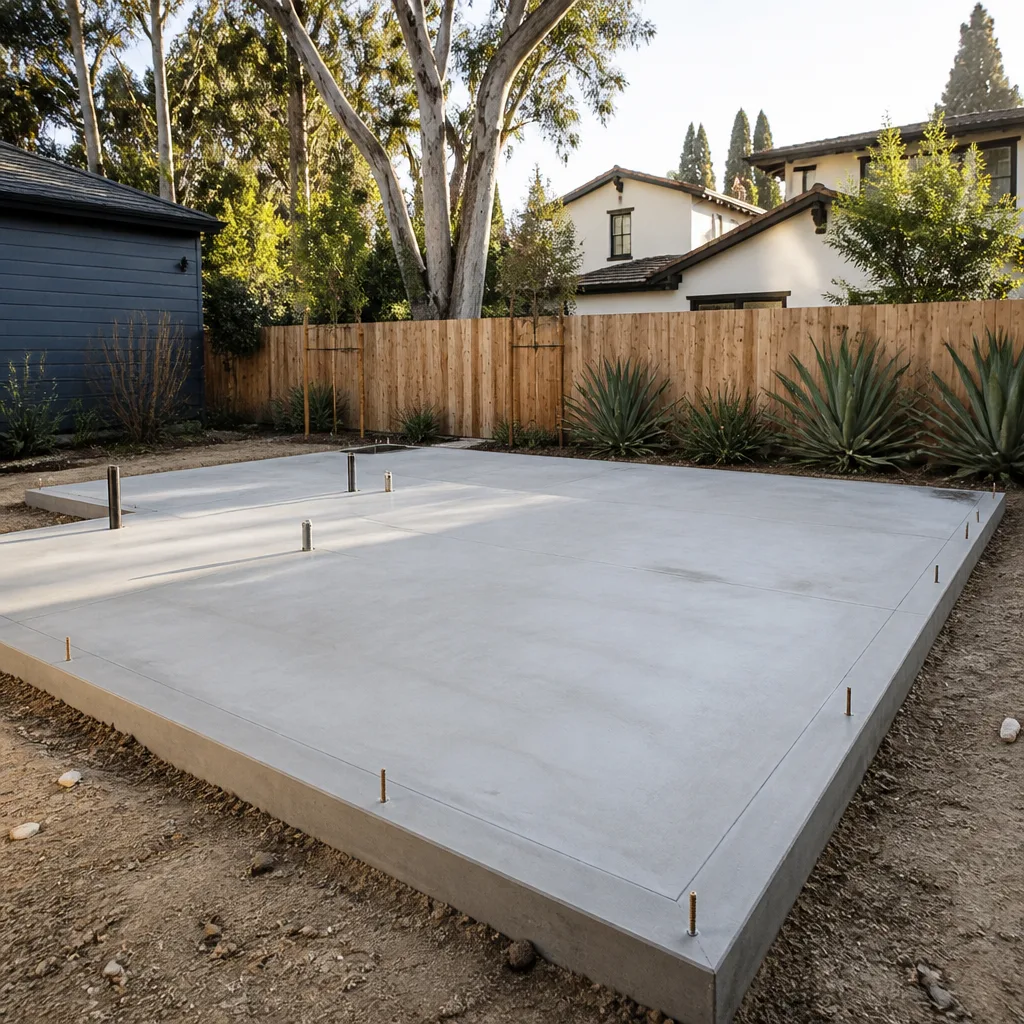
The parts of site prep you can safely check yourself: walk your lot after a rain and see where water sits. Note where your main house’s water, sewer, and panel currently stub out relative to where you want the unit. Take photos of the lot from all four corners. That’s the useful homework.
What you should not do yourself is anything involving gas lines or the electrical panel feeder. SoCalGas will not let you touch the service side, and an undersized or improperly bonded feeder to a 100-amp subpanel is how units burn. Trenching deeper than 18 inches in West Covina means a call to DigAlert and a working understanding of where the existing gas main runs across the average 1960s lot. We’ve pulled rusted-out cast iron out of trenches that was 40 years past its life. Knowing when to stop digging is the job. If your Abodu unit is already on-site and you’re redoing utilities around it, call (559) 238-9583 and we’ll tell you what you’re looking at.
FAQs
Most full site prep sequences run 2 to 4 weeks, not including utility company service appointments. Trenching, compacting, and pad work usually take 5 to 8 working days. The waits come from PG&E and SoCalGas, which in West Covina typically schedule service upgrades 6 to 10 weeks out. We submit those applications on day one so the utility clock runs while we’re doing the ground work. Call (559) 238-9583 for a schedule specific to your street.
Sometimes. Water and sewer lines in good condition can be extended rather than replaced, as long as they meet current code diameter and the fall rate is intact. Electrical is another matter: a 1960s West Covina panel at 100 amps feeding your house won’t carry an additional 100-amp Abodu subpanel without an upgrade. Gas depends on line diameter and the unit’s BTU load. We’ll tell you what can stay and what can’t before any money changes hands, and the written bid reflects exactly that.
No, not unless you add scope. We write a line-item price before we dig a single inch, and the number on day one is the number on the final invoice. If we hit unforeseen conditions like buried concrete or a collapsed old sewer line, we stop, show you what we found, and price any additional work separately before proceeding. You approve it first. That’s how Reed Calloway runs every Abodu site prep job in West Covina: put it in writing, build it right, and move on.
We stock the common-spec materials on our trucks and in our local yard: schedule 40 PVC in 4-inch and 2-inch, PEX-A supply line, ABS and cast-iron adapters, Square D and Eaton breaker stock, and rebar in the sizes Abodu calls for. For non-standard items specific to your lot, we order from our local West Covina suppliers, which typically means 24 to 48 hours. The only long-lead items are utility company services, and those we schedule before we need them.
We handle everything from bare dirt to the utility hookups at the unit’s connection points, and we coordinate directly with Abodu’s delivery and set crews. We don’t manufacture or modify the units themselves. What we guarantee is the site work: foundation, utilities, drainage, and coordination. Our crews also have experience with Cover and Dvele units, so we can adapt if your plans change mid-project.
If you have an Abodu unit coming and a lot in West Covina that needs real site prep, call (559) 238-9583. We’ll walk the property, write the price, and hand it to you before you decide anything.
Written by Reed Calloway, Owner, Fielding ADU West Covina at Fielding ADU West Covina, serving West Covina and nearby areas.