Tuff Shed Site Prep & Utilities: The West Covina Owner’s Guide
Site prep and utility runs for a Tuff Shed build in West Covina typically cost $1,800 to $6,500 depending on grade, access, and what the utility trench has to cross. We handle the full scope: pad or slab, drainage, and underground electrical or water lines to the shed footprint. Most owners discover the prep was wrong after the shed is already sitting on it, which means we’re usually called to fix a pad that heaved, a trench that settled, or a panel feed that was never sized right in the first place.
If your shed is already in and something underneath is moving, or the power trips every time you plug in more than a drill, the prep or utility run was never done to the load. That’s the call we get most often in West Covina.
Which Tuff Shed Models This Applies To
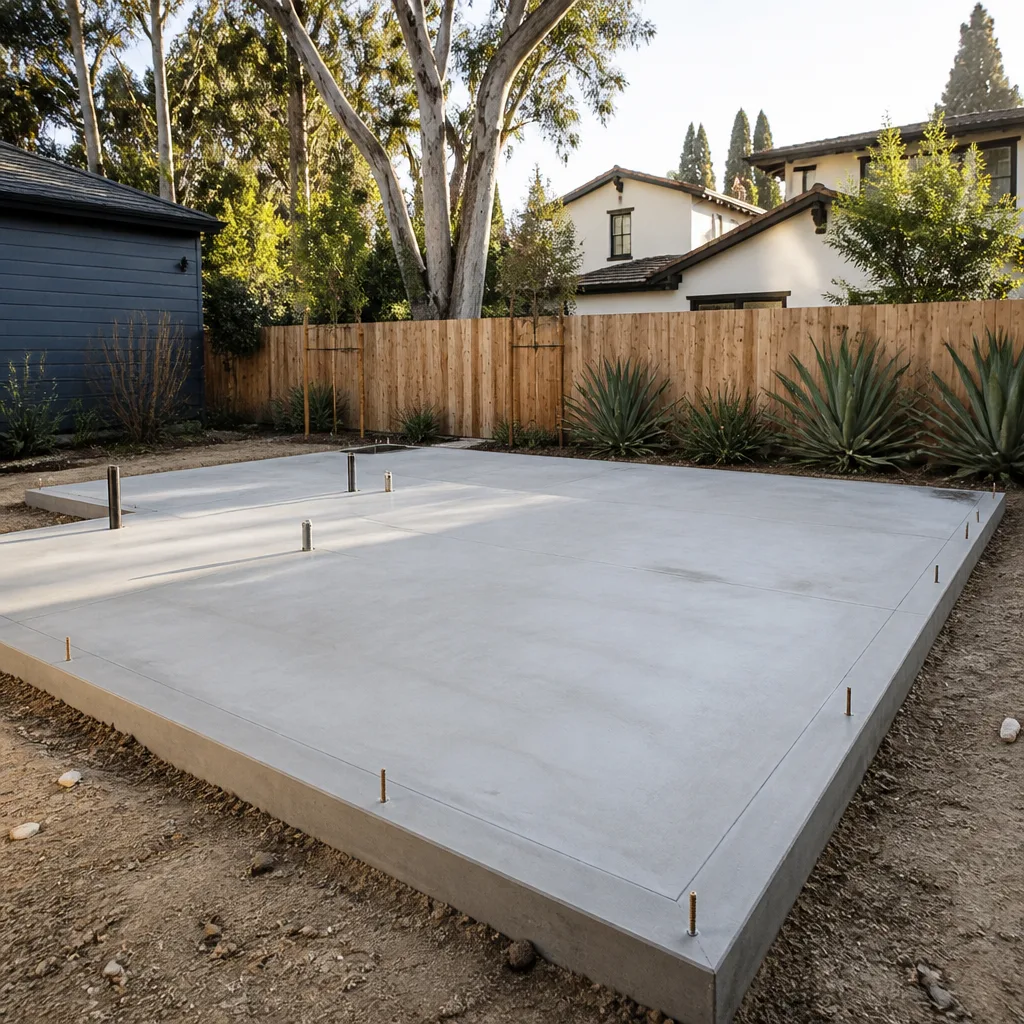
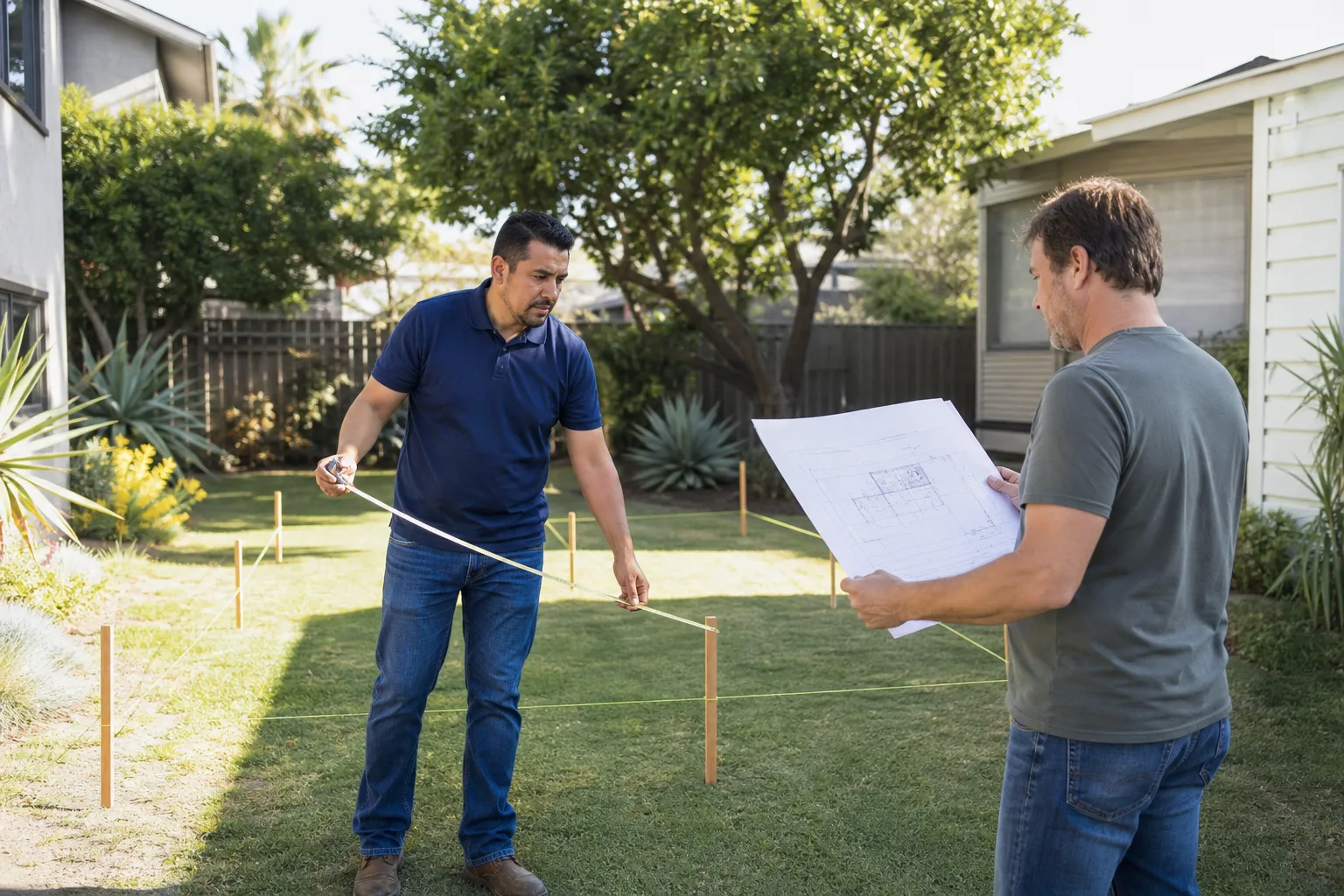
This applies to any Tuff Shed with a slab or gravel-pad install: the Premier Ranch, Premier Tall Ranch, Premier Pro Series, and the barn-style models. The compatibility issue isn’t the shed itself, it’s the footer system and the utility entry point. Tuff Shed’s engineered plans assume a level, compacted base and a specific entry location for conduit. When the pad is out of level by more than an inch over eight feet, the wall bottom plates pull, the doors rack, and the warranty on the structure gets voided. Our crews check grade with a laser before anything gets bolted down, because the fix for an out-of-level pad in West Covina means demolition and a new pour. Nobody wants that twice.
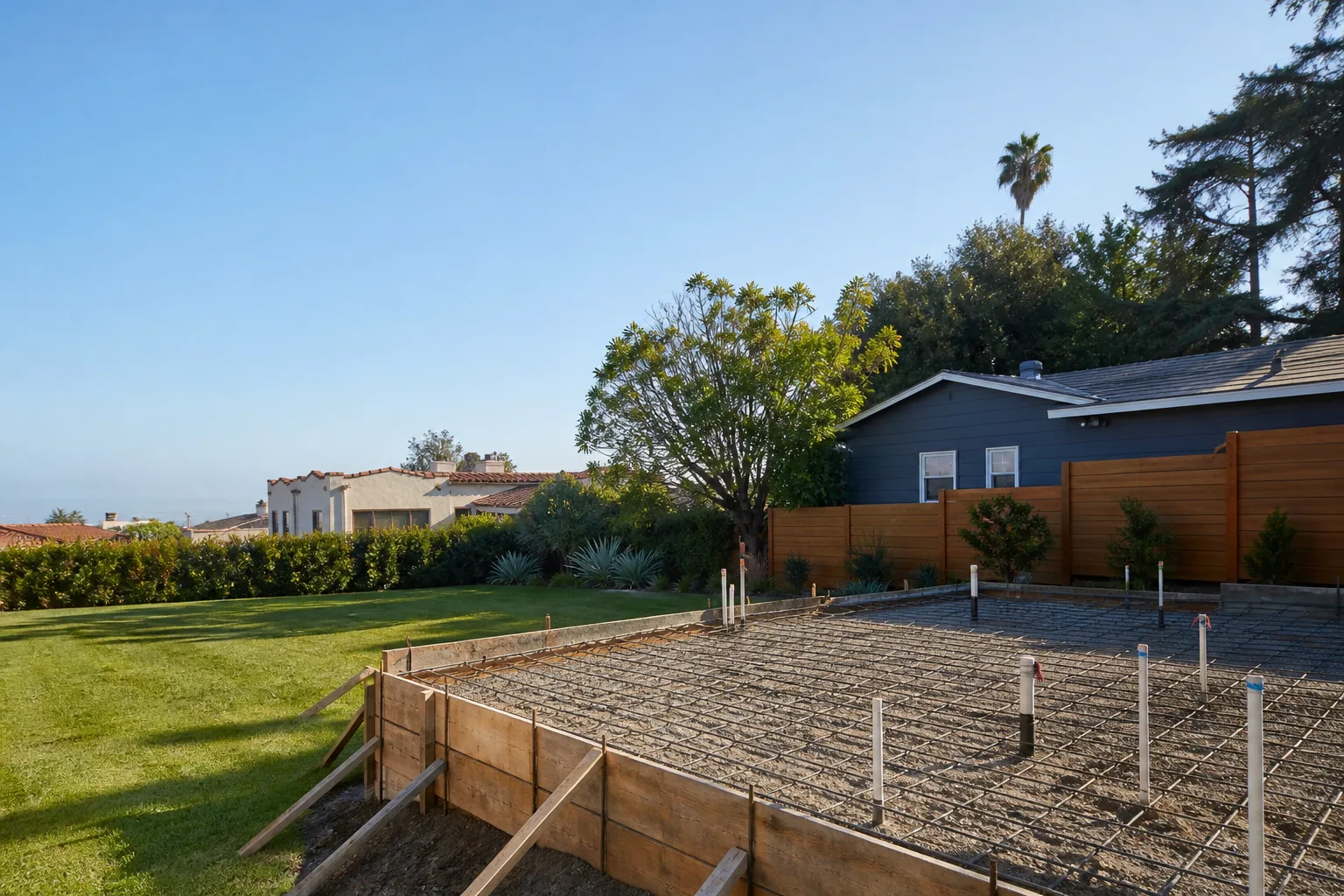
OEM versus aftermarket matters less here than it does on doors or trim. The real cost driver is concrete, rebar, conduit, and wire sizing. We stock standard 3/4-inch Schedule 40 PVC conduit and common buried-rated feeders on the truck, but the pad itself is poured per site conditions, not off a shelf.
Signs Your Tuff Shed Site Prep & Utilities Is Failing
- Doors that bind or scrape the jamb. This is usually pad settlement. Clay soils in West Covina expand and contract with rain, and a pad without proper compaction will move. The shed is fine; the ground under it isn’t.
- Water pooling at the low corner. Grade was never sloped away from the pad. Pooling water against Tuff Shed skids or bottom plates rots the floor system within a few seasons.
- Breaker trips when you run a saw or space heater. The feed wire is undersized or the conduit run is too long for the wire gauge. A 100-foot trench with 14-gauge wire cannot carry a 20-amp tool load, period.
- Concrete cracks radiating from the anchor bolts. Bolts were set too close to the pad edge, or the pad wasn’t thick enough at the perimeter. This is a structural issue, not cosmetic.
- Visible gaps under the shed skids. The base was never fully bearing. Over time the framing sags into the gaps and the floor feels springy. In a workshop, that’s a problem.
Replacement Cost & What’s Included
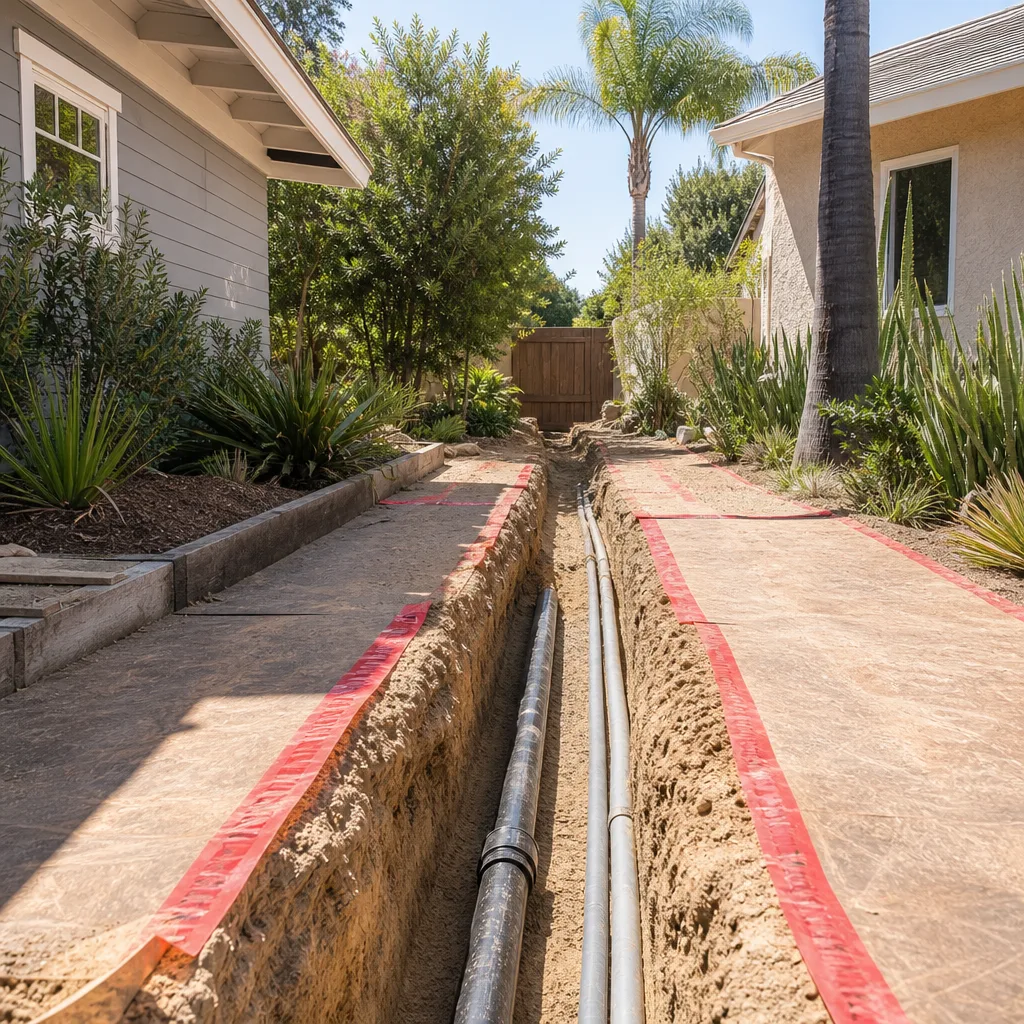
In West Covina, site prep repair on an existing Tuff Shed pad runs $2,200 to $6,500 when we’re lifting, re-grading, repouring, and fixing drainage. A new pad with utility stubs for a shed not yet built runs $1,800 to $4,800 depending on access and whether the lot requires a retaining cut. Electrical trenching and a new subpanel feed add $1,200 to $3,600 depending on distance from the main panel and whether we’re cutting through hardpan or dealing with tree roots.
Every quote is written, line by line, before work starts. You’ll see the concrete number, the conduit and wire, the permit fee, and the labor. If the number changes during the job, that only happens if you change the scope. The work is covered under the Garrison Standard: one full year in writing. If the pad settles or the trench fails inside that year, we come back and fix it at no charge.
DIY or Call Us?
You can check a few things yourself. Run a level across the pad. Look for standing water after rain. Plug a heavy load into the shed circuit and see if the breaker holds. That tells you whether you have a problem. What it doesn’t tell you is whether the wire in the ground is aluminum, undersized, or spliced without a junction box. And underground electrical work is not a weekend project. West Covina requires permits for new feeder lines, and a wrong splice buried under three feet of dirt is how you end up with a dead circuit or a shock hazard you can’t see.
If the pad has moved or the power is acting up, call us at (559) 238-9583. We’ll send someone who knows what to look for, and we’ll put every fix in writing before we touch the ground.
FAQs
A properly compacted 4-inch slab on stable grade lasts 30 years or more; a thin pad poured directly on uncompacted fill can fail in three. Clay-heavy soil in West Covina makes compaction and drainage the two things you cannot skip. Call (559) 238-9583 and we’ll tell you honestly whether your pad is worth saving.
Small edge settlement can sometimes be corrected with mudjacking or poly foam, but anything affecting the shed’s bearing points usually means cutting out and repouring the affected section. We’ll give you the cheaper fix if it will actually hold.
Most pad and utility repairs on a Tuff Shed run two to four days including permit inspection. A full pad repour with trenching and a new feeder can run five to seven. You’ll get a written schedule before we start.
We stock common conduit, feeders, anchor bolts, and compactable base material on the truck. The concrete is ordered to spec per pour. If you need a part matched to a Tuff Shed, we’ll give you the exact spec and source it before we arrive.
Written by Reed Calloway, Owner, Fielding ADU West Covina at Fielding ADU West Covina, serving West Covina and nearby areas.