Last updated October 15, 2026
The Complete Guide to ADU in West Covina
West Covina’s R-1 single-family zone caps lot coverage at 40%, which means a surprising number of homeowners who think they have room for a detached ADU actually don’t, until they account for the ADU exemption added by AB 68. That exemption changed the math for thousands of lots east of the 605, but it did not change everything. What follows is the city-specific checklist that statewide ADU guides skip: the real setback numbers, the sewer lateral requirements, the plan-check timeline compared to Covina and Baldwin Park, and what each ADU type actually costs to build here, not in Sacramento’s averages. For more guides & resources, explore our full blog.
Quick Answer
Building an ADU in West Covina is legal on nearly every single-family lot under California state law, and the city follows the state’s minimum standards on size and setbacks in most cases. A detached 800-square-foot ADU in West Covina typically costs $180,000 to $270,000 before permit fees, while a garage conversion runs $95,000 to $150,000, and the city’s lot coverage, utility connection, and plan-check requirements add roughly 6 to 10 weeks to the state’s ideal timeline. The single most important local fact: West Covina charges sewer connection fees per new dwelling unit, and that line item catches more homeowners off guard than any other cost in the process.
Table of Contents
- West Covina ADU Rules: Setbacks, Lot Coverage, and Where the City Follows the State
- ADU Types That Work on West Covina Lots
- What Each ADU Type Costs in West Covina
- West Covina Plan-Check Timeline and Fees vs. Covina and Baldwin Park
- Utility Connections: Sewer Laterals, Water, and Public Works Requirements
- The Permitting Steps, In Order
- Prefab and Modular ADUs vs. Conventional Builds in West Covina
- Common Mistakes to Avoid
- When to Call a Professional
- Frequently Asked Questions
West Covina ADU Rules: Setbacks, Lot Coverage, and Where the City Follows the State
The first thing to understand is that West Covina does not write its own ADU ordinance from scratch. Like most San Gabriel Valley cities, it operates under California Government Code Section 65852.2, which sets the statewide floor for ADU development. That floor says a city must allow at least one ADU up to 800 square feet on any single-family lot, regardless of local zoning rules. West Covina follows that floor. What makes West Covina distinct is what it adds on top.
The city’s R-1 zone, which covers the bulk of residential West Covina, sets a base lot coverage limit of 40%. Lot coverage means the percentage of your lot that can be covered by structures: the main house, the garage, any patio covers with solid roofs, and the ADU itself. On a standard 6,000-square-foot West Covina lot, 40% gives you 2,400 square feet of allowed building footprint. A three-bedroom ranch house from the 1960s might already occupy 1,800 square feet, leaving 600 square feet of coverage room. That is not enough for an 800-square-foot detached ADU, which is why so many homeowners assume they are out of luck. AB 68 changed that. The state law says a city cannot apply lot coverage limits to an 800-square-foot detached ADU the same way it would to a house addition. In practice, West Covina allows the ADU to exceed the 40% coverage cap up to the state’s size limits, within a 4-foot rear and side setback, and with no setback required if the ADU is a garage conversion or is built within an existing structure.
Here is how the setbacks actually work in West Covina for a detached ADU:
- Rear yard setback: 4 feet minimum from the rear property line.
- Side yard setback: 4 feet minimum from each side property line.
- Front yard setback: Same as the main dwelling, typically 20 feet in the R-1 zone.
- Between ADU and main house: 6 feet minimum if the ADU is detached, measured wall to wall.
- Garage conversion or attached ADU: No additional setback beyond what the existing structure already meets.
- Height limit: 16 feet for a detached ADU on a single-family lot, up to 18 feet if within a half-mile of transit or if the ADU is over a garage, per state law.
One rule specific to West Covina worth knowing: the city requires a solid roof on any detached ADU, not a flat roof, and exterior materials must be compatible with the main house. That is not in the state code; it is a local design standard we have seen applied consistently in plan check. If your main house is stucco, the ADU should be stucco, or at minimum stucco-matched. James Hardie cement siding is accepted and increasingly common because it holds paint well in the San Gabriel Valley heat, but plan check wants to see a material call-out that reads as intentional, not an afterthought.
ADU Types That Work on West Covina Lots
West Covina was built out in the 1950s and 1960s, and the lot sizes reflect that era. Most single-family lots run 5,000 to 7,500 square feet, with 6,000 square feet as the most common number we see on title reports. That shape drives which ADU types make sense. On a 5,000-square-foot lot, a detached 800-square-foot ADU is legal under state law but eats up most of the usable backyard and often triggers expensive site work to relocate drainage, walkways, or mature plantings. On a 7,500-square-foot lot, a detached unit fits without crowding the yard.
The four ADU types we see approved most often in West Covina, in order of frequency:
- Garage conversion: The existing garage becomes a one-bedroom or studio ADU. No new foundation needed in most cases, no setback issues, faster plan check, and the lowest cost per square foot. The catch is losing the garage parking, and West Covina does not require replacement parking for ADUs under state law, which is why conversions are the most common type here.
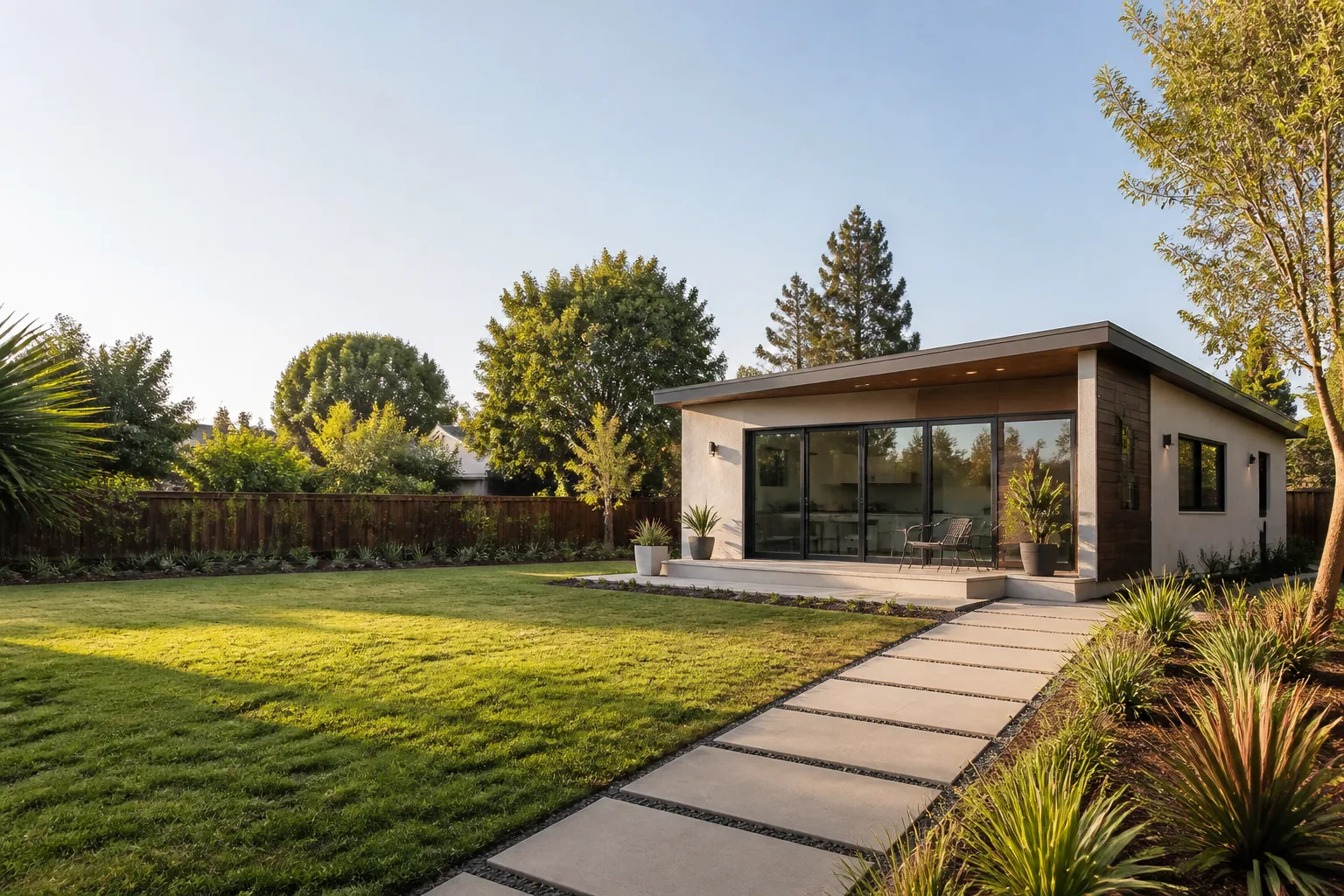
- Detached new-build ADU: A standalone structure in the rear yard, typically 500 to 800 square feet, one or two bedrooms. More expensive per square foot, but it preserves the garage and gives the tenant or family member full privacy. Most common on lots 6,500 square feet and up.
- Attached ADU: Built as an addition to the main house, sharing one wall. Often the choice when the side yard is too narrow for a detached unit but too wide to waste. Lower cost than detached because one wall is already there, but it changes the roofline and the main house’s floor plan.
- Junior ADU (JADU): A conversion of existing space inside the house, typically a bedroom with a private exterior entrance, capped at 500 square feet with an efficiency kitchen. The least expensive option. West Covina allows JADUs under state law, but they rarely pencil out for rental income because they cannot be sold separately from the main house.
If your lot is narrow, under 50 feet wide, a detached ADU gets tight. State law requires 4 feet on each side, so a 14-foot-wide ADU needs a lot that gives you 22 feet of usable side-to-side room after setbacks. On a 50-foot lot, that means the ADU plus setbacks consumes nearly half the lot width. That is why attached ADUs and garage conversions dominate the narrower streets in neighborhoods like the area north of Cameron Avenue, while detached units show up more consistently in the wider-lot neighborhoods south of the 10 freeway and east toward Azusa Avenue.
See how these types compare: ADU Builders in West Covina.
What Each ADU Type Costs in West Covina
Costs in West Covina run higher than the statewide averages for one simple reason: local labor rates. Contractors here price against the broader Los Angeles County market, not the Inland Empire, and West Covina’s central location between the 10, the 60, and the 605 freeways means crews commute in from all directions and charge accordingly. As of 2026, here are the real numbers we quote on West Covina projects:
| ADU Type | Typical Size | Cost Range (Before Permit Fees) | Permit Fees (Approximate) |
|---|---|---|---|
| Garage conversion (studio or 1-bed) | 300 – 500 sq ft | $95,000 – $150,000 | $5,000 – $9,000 |
| Attached ADU (1-bed) | 400 – 600 sq ft | $130,000 – $190,000 | $7,000 – $11,000 |
| Detached ADU (1-bed) | 500 – 700 sq ft | $160,000 – $225,000 | $8,000 – $13,000 |
| Detached ADU (2-bed) | 700 – 1,000 sq ft | $200,000 – $285,000 | $10,000 – $16,000 |
| Junior ADU (JADU, inside main house) | 300 – 500 sq ft | $40,000 – $80,000 | $3,000 – $6,000 |
Three cost factors hit West Covina projects harder than they hit neighboring cities. First, sewer connection fees: West Covina Public Works charges a connection fee per new dwelling unit, and that line item is not included in most contractors’ initial bids. Plan for $4,000 to $9,000 depending on whether a new lateral is required or the existing lateral can be upsized. Second, San Gabriel Valley soil: much of West Covina sits on clay-heavy soil that expands and contracts with moisture, and plan check commonly requires a geotechnical report for detached ADUs with new foundations. That report runs $1,500 to $3,000, and if the soil report recommends deeper footings or a post-tension slab, foundation costs go up 15% to 25% versus a conventional slab. Third, overhead utility lines. Many West Covina backyards have power poles along the rear property line, and a detached ADU within 3 feet of those lines triggers a Southern California Edison clearance review and possibly a service drop adjustment, adding $1,000 to $2,500 in electrical work.
The price we give you in writing before any work starts is the number on the final invoice. No change orders on the framing because the lumber estimate was off, no surprise sewer fee at the end. We account for the lateral, the soil report, and the Edison clearance up front, because we’ve built enough ADUs in West Covina to know where the real costs hide. That is the standard we operate under, the same standard Garrison Partners has held since 2006.
West Covina Plan-Check Timeline and Fees vs. Covina and Baldwin Park
If you are comparing West Covina to its neighbors, use these numbers. West Covina’s Community Development Department runs ADU plan checks through the Building and Safety Division, and a complete ADU submittal takes 6 to 10 weeks for first-round comments, then another 3 to 6 weeks per resubmission. Most projects get approved in two rounds, putting the typical plan-check timeline at 3 to 5 months from submittal to permit issuance. That is faster than Baldwin Park, which runs 4 to 7 months for a similar ADU, and slightly slower than Covina, where 2 to 4 months is common because the city has a dedicated ADU plan-check lane. West Covina has been staffing up its building counter over the last two years, but the department still reviews ADUs in the same queue as larger residential additions.
Fee totals for a detached 800-square-foot ADU in West Covina run $8,000 to $16,000 across building permit, plan check, electrical, plumbing, mechanical, sewer connection, and school district fees. A garage conversion runs $5,000 to $9,000. Compare that to Covina, where the same detached ADU runs $6,000 to $12,000, and Baldwin Park, where it runs $7,000 to $14,000. West Covina is in the middle of the SGV range on fees. The line item that varies the most is the sewer connection fee, which Public Works calculates based on fixture units and whether the existing lateral was sized for one dwelling or two. If your house was built before 1970 and still has the original 4-inch clay lateral, expect to pay to replace or sleeve it, and that cost is yours whether you build a 400-square-foot garage conversion or a 1,000-square-foot detached ADU.
One more local timeline factor: if your lot is in a hillside overlay or has slope issues, the city requires additional grading review that adds 3 to 6 weeks to plan check. West Covina’s hillside neighborhoods, particularly in the southern hills south of Merced Avenue, see this constantly. A flat-lot ADU on the valley floor moves through faster than a hillside lot, and the city applies that rule without exception.
Utility Connections: Sewer Laterals, Water, and Public Works Requirements
The utility connection is where West Covina ADU projects stall. Not because the city is difficult, but because homeowners do not realize a new ADU is a new dwelling unit in the eyes of Public Works, not just a new room. A dwelling unit triggers a sewer connection review, even if the ADU shares the existing line with the main house. The question Public Works asks is whether the existing lateral is sized to handle the additional flow, and on houses built in the 1950s and 1960s, the answer is frequently no.
Here is what the utility process looks like on a typical West Covina detached ADU:
- Sewer lateral inspection: A plumber or contractor runs a camera down the existing lateral to determine material, diameter, and condition. A 4-inch clay or cast-iron lateral from the original build is almost always flagged for replacement or upsizing.
- Public Works review: The city reviews the lateral inspection and the ADU’s plumbing fixture count. A one-bathroom ADU with a kitchen adds 5 to 8 fixture units, which on a 4-inch lateral often exceeds the city’s capacity table for a single-family lateral.
- Connection fee payment: You pay a sewer connection fee per new dwelling unit. The exact number comes from Public Works based on the fixture count, not from your contractor. It is a separate check, not a contractor pass-through.
- Water service review: The Suburban Water Systems or the city water division (depending on your street) confirms the existing meter size can serve two dwelling units. A 3/4-inch meter on the main house may need to be upsized to 1 inch if the ADU has its own laundry or a second bathroom.
- Edison clearance: If the detached ADU sits near overhead lines along the rear property line, Southern California Edison reviews the plan and may require a service drop adjustment before framing inspections can proceed.
The sewer lateral is the big one. Replacing a 40-foot clay lateral under a West Covina backyard runs $6,000 to $12,000 in trenching, pipe, and restoration. If the lateral runs under a concrete driveway or patio, add $2,000 to $5,000 for saw-cutting and concrete replacement. This is not a cost you can skip. Public Works will not sign off on the ADU until the lateral is right, and the inspection happens at the plumbing rough-in stage, not the end of the project.
If this level of detail is new to you, that is normal. Most West Covina homeowners find out about the sewer lateral requirement three or four months into the process, after the plans are drawn and the budget is set. Getting it identified early is the difference between a permit that issues on schedule and one that languishes in plan check while the lateral gets designed.
The Permitting Steps, In Order
Here is the actual sequence for a detached ADU permit in West Covina, from first conversation to building permit in hand. Each step has its own wait time, and the order matters.
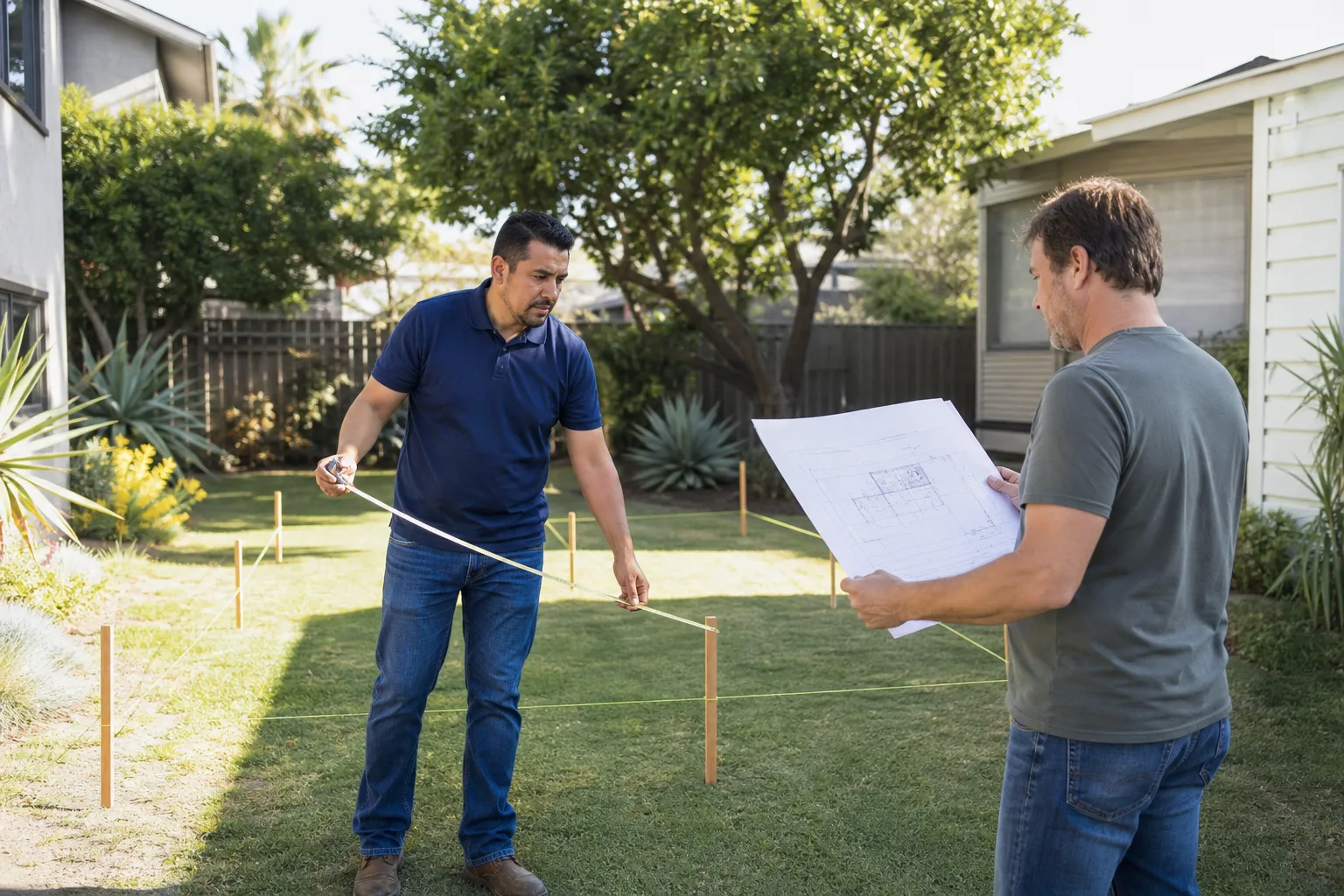
- Site evaluation and feasibility check (1-2 weeks): We look at the lot, the zoning, the existing structures, the sewer line location, and the overhead utilities. This is where most projects either move forward or get redirected to a garage conversion or attached ADU.
- Survey or plot plan (1-2 weeks): A licensed surveyor marks the property corners and produces a plot plan showing the existing structures and the proposed ADU footprint with setbacks. The city will not accept an ADU submittal without this.
- Architectural plans (3-6 weeks): The ADU gets drawn: floor plan, elevations, roof plan, electrical and plumbing layouts, window and door schedules, and the energy compliance forms (Title 24).
- Structural engineering and geotech report if required (2-4 weeks): A structural engineer designs the foundation and framing. On clay-heavy West Covina soil, a geotechnical report is commonly required for detached units.
- Submittal to West Covina Building and Safety (day 1 of plan check): The complete package goes in. The clock starts.
- First-round plan check comments (6-10 weeks): The city returns comments. They are almost always technical: structural details, energy calcs, drainage, sewer lateral requirements.
- Resubmission and second-round review (3-6 weeks): The revised plans go back in. Most projects approve on the second round.
- Permit fees paid and permit issued (1-2 weeks): You pay the permit fees, the city issues the building permit, and the job is green-tagged for construction.
Total from site evaluation to permit in hand: 4 to 7 months for a detached ADU, 3 to 5 months for a garage conversion or attached ADU. The biggest variable is plan check, and the biggest lever you have is submitting a complete package the first time. Incomplete submittals get sent back to the end of the line, and West Covina does not give partial reviews.
For a deeper look at how the permitting and construction process works on the addition side: Room Addition Contractor in West Covina.
Prefab and Modular ADUs vs. Conventional Builds in West Covina
West Covina homeowners ask about prefab ADUs constantly, and for good reason. A prefab unit from a company like Abodu or Cover arrives on a truck, gets craned into the backyard, and is livable in a fraction of the time a stick-built ADU takes to frame, drywall, and finish. The tradeoff is cost and fit. Abodu’s units, which are the most commonly permitted prefab ADUs in the San Gabriel Valley, run $190,000 to $260,000 installed for a one-bedroom, which is at or slightly above the cost of a conventional 500-square-foot detached build in West Covina. What you are paying for is speed and predictability: the unit is factory-inspected, the construction phase is measured in weeks not months, and the finish quality is consistent because it was built indoors.
The permit process for a prefab ADU in West Covina is not faster at the front end. The city still reviews the same structural, energy, and utility documents, and plan check takes the same 6 to 10 weeks. The savings come after the permit is issued. A prefab set takes 2 to 4 weeks on site, while a conventional build runs 6 to 10 months. That schedule compression matters if you are paying a mortgage on a house with no rental income yet.
Conventional construction remains the right call for lots with tight access, unusual yard shapes, or a desire to match the main house’s architecture exactly. A stick-built ADU with James Hardie siding and a composition shingle roof reads as part of the original property, which matters in West Covina neighborhoods where the houses are all from the same 1960s tract and a visible ADU sticks out. We build both, and we have worked with prefab platforms including Abodu and Cover alongside conventional builds using James Hardie and Tuff Shed-style structures for budget-conscious garage conversions. The right method depends on your lot, your timeline, and your budget, not on which system happens to be popular this year.
Common Mistakes to Avoid
- Assuming the 40% lot coverage cap is a dealbreaker. AB 68 lets an 800-square-foot detached ADU exceed the coverage cap. Before you give up on a detached unit, have someone run the actual numbers with the exemption applied.
- Bidding the job before checking the sewer lateral. A 60-year-old clay lateral that needs full replacement is a $6,000 to $12,000 surprise. Camera the line before you sign a contract, not after framing starts.
- Drawing plans before the property survey. West Covina will not accept an ADU submittal without a licensed surveyor’s plot plan, and if the survey reveals the existing garage is 3 feet over the property line, the whole design changes.
- Ignoring the overhead power lines. Many West Covina backyards have Edison poles along the rear line, and a detached ADU within clearance distance triggers an Edison review that can add weeks and $1,000 to $2,500 to the budget.
- Building the ADU without checking the meter size. A 3/4-inch water meter serving a two-bathroom ADU gets flagged by Public Works or the water district, and upsizing after the fact means re-trenching a line you just backfilled.
- Paying a contractor the full amount before the permit closes. West Covina issues a certificate of occupancy only after final inspection, and any contractor who demands full payment before that inspection is asking you to absorb their risk. A written contract with a payment schedule tied to milestones is non-negotiable.
- Choosing a detached ADU on a 5,000-square-foot lot without measuring the yard. The unit fits on paper, but once you subtract the 4-foot setbacks, the 6-foot separation from the main house, the existing patio, and the mature tree the city won’t let you remove, there is no buildable space left. Measure first.
When to Call a Professional
You need a professional when the lot has any complication: a slope, an old sewer lateral, overhead power lines along the rear property line, a garage built before 1960 that may not have a permitted foundation, or a property line dispute with a neighbor. See our DIY vs Professional ADU: The West Covina Homeowner’s Decision Guide for help deciding. You also need one when the headcount on your project is wrong. A homeowner trying to self-manage an ADU with three separate subs and no GC does not save 15%; they spend that 15% in coordination delays, rework, and plan-check resubmissions. If you want the price in writing, the permit pulled correctly, and the sewer lateral identified before it becomes a surprise, call a builder who does this in West Covina specifically, not one who does it everywhere. Fielding ADU West Covina offers free estimates in West Covina; call (559) 238-9583 and we will walk the lot, run the coverage numbers, and tell you what is buildable before you spend a dollar on plans.
Frequently Asked Questions
A garage conversion in West Covina typically costs $95,000 to $150,000, an attached ADU runs $130,000 to $190,000, and a detached 800-square-foot ADU runs $180,000 to $270,000, all before permit fees of $5,000 to $16,000. The sewer lateral, soil conditions, and Edison clearance requirements can add $10,000 to $20,000 to the total. Call (559) 238-9583 for a written estimate on your specific lot.
Yes. West Covina follows California state law, which requires the city to permit at least one ADU up to 800 square feet on any single-family lot zoned R-1. The city’s 40% lot coverage cap still applies to house additions, but AB 68 exempts the ADU from that cap up to the state’s size limits.
Plan check takes 6 to 10 weeks for the first round, another 3 to 6 weeks for resubmission, and most projects are approved in two rounds. Total time from submittal to permit issuance is typically 3 to 5 months, not including the time to prepare plans, survey, and engineering, which adds another 6 to 10 weeks. Call (559) 238-9583 to get a realistic timeline for your project.
If your existing lateral is 4-inch clay or cast iron from the original build, probably yes. West Covina Public Works reviews every ADU as a new dwelling unit, and most 1950s- and 1960s-era laterals are undersized for the added fixture load. Replacement costs $6,000 to $12,000 in most West Covina yards, more if the line runs under concrete.
An ADU is a separate dwelling unit, either detached, attached, or a garage conversion, with its own full kitchen and bathroom. A JADU is a conversion of space inside the main house, capped at 500 square feet, with an efficiency kitchen and no separate ownership from the main property. Both are allowed in West Covina under state law, but an ADU can be rented separately and adds more property value.
Yes. West Covina permits prefab ADUs from manufacturers like Abodu and Cover, and the plan-check process is the same as a conventional build at the front end. The savings come during construction: a prefab unit goes from permit to move-in in 2 to 6 weeks on site, versus 6 to 10 months for stick-built. Call (559) 238-9583 for guidance on whether prefab or conventional makes sense for your lot.
The Bottom Line
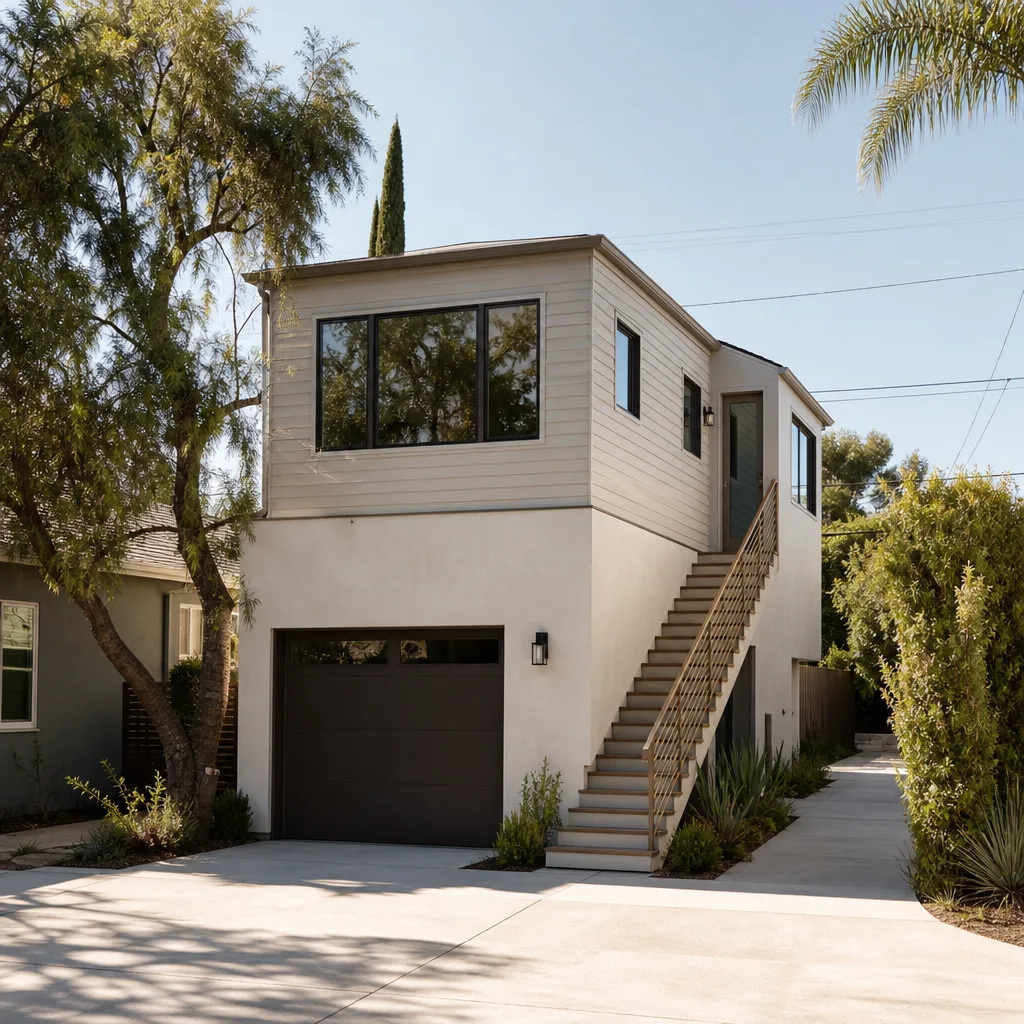
Building an ADU in West Covina is a city-specific project with city-specific rules. The 40% lot coverage cap scares people off until they learn about the AB 68 exemption. The sewer lateral requirement catches people who never knew their 1960s clay pipe was undersized. The plan-check timeline runs faster than Baldwin Park and slower than Covina, and the cost range is higher than statewide averages because local labor and soil conditions drive it. If you do one thing before spending money on plans: have the lot evaluated by someone who builds ADUs in West Covina specifically, not someone who builds them everywhere. Get the sewer scoped, the coverage numbers run, and the setback math done first. Then decide what to build. The rest is just execution.
Start with the basics: Fielding ADU West Covina home | Garage Conversion Contractor in West Covina.
Written by Reed Calloway, Owner at Fielding ADU West Covina, serving West Covina since 2006.